


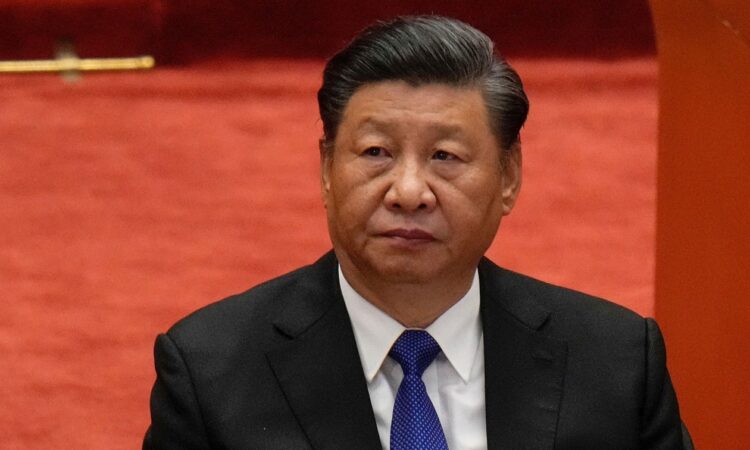



Chinese President Xi Jinping has launched one of the biggest purges in the modern history of the Communist Party of China. A total of 33 officials have been dismissed or have lost their positions, while the absence of more than a quarter of the Central Committee members at the latest high-level meeting has highlighted the scale of the changes within the country's leadership structures. According to a report by the British newspaper The Guardian, only 279 full and alternate members of the Central Committee attended the Fifth Plenary Session, out of 376 who were originally elected in 2022. So, more than 25% of the initial composition was absent from this meeting, with a significant part of the vacancies related to purges carried out in recent years.
This is the largest number of vacancies recorded at a Central Committee plenary session in modern Chinese history, demonstrating the extent of Xi Jinping's interference in party and military structures. Among the names confirmed as dismissed are Zhang Yuxia, a former deputy commander of the Chinese army, and Ma Xingrui, a former Communist Party secretary in the Xinjiang region. Meanwhile, an official explanation has not yet been given for the absence of several other officials. Neil Thomas, a senior fellow at the Asia Society think tank, said the record number of vacancies underscores the importance Xi Jinping places on internal discipline and control over the party.
Anti-corruption campaign or elimination of political rivals?
Since coming to power in 2012, Xi Jinping has made the fight against corruption a central part of the Communist Party's leadership. But in recent years, the campaign has expanded significantly, affecting not only administration officials but also China's most powerful political and military figures.
The purges have raised questions about whether they are solely an effort to fight corruption or whether they are also being used as a tool to remove political opponents and punish officials deemed insufficiently loyal to the president. Xi himself has repeatedly expressed dissatisfaction with the lack of discipline within the party, which exercises control over the state and Chinese society. In his recent statements, he has called for the elimination of “sick trees” from the party ranks, while describing the fight against corruption as a “never-ending journey.”
The scale of this campaign is particularly evident in the Chinese military, where a series of dismissals has hit the Central Military Commission, the highest governing body of the Armed Forces, hard. Of the seven members that this commission originally had, only two currently remain: Xi Jinping himself and Zhang Shengmin, responsible for overseeing the fight against corruption in the military. During the last plenary session, Zhang Shengmin was promoted to the Politburo of the Communist Party, its highest governing body. He is now the only representative of the armed forces in this structure. According to reports by The Guardian, the scale of the purges in the army and the removal of high-level figures have also raised concerns about the continuity of leadership and organization of military structures.
2027 Congress, Xi Jinping aims for fourth term
Beyond the purges, the Fifth Plenary Session has also served to prepare the ground for the 21st Communist Party Congress, which is held once every five years and is expected to be held in the second half of 2027. This congress will be crucial in determining the future composition of China's leadership. Xi Jinping is expected to seek a fourth term at the helm of the party, further consolidating his power and becoming the longest-serving leader of communist China since Mao Zedong.
The congress will elect the new members of the Central Committee and the Politburo, two of China's most important power structures. However, analysts say that purging such a large number of officials could make it more difficult to identify suitable candidates for top leadership positions. A significant number of figures who had been promoted in the party and military structures have already left, while Xi is preparing to determine the team that will accompany him in the next term. Thus, ahead of the 2027 congress, the anti-corruption campaign and discipline of party structures remain at the center of Xi Jinping's strategy to maintain control over China's political and military apparatus.