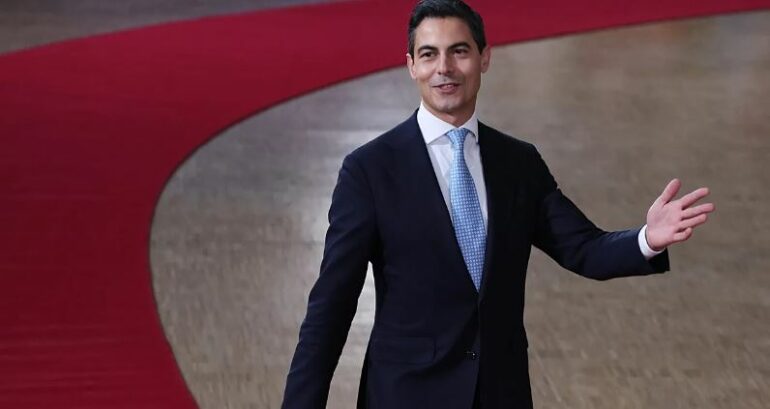



Dutch Prime Minister Rob Jetten is struggling to avoid a coalition collapse after bitter clashes between the parties that make up his minority government. Disagreements over budget plans and especially a new tax on millionaires' wealth have sparked a political crisis, putting the future of the cabinet in doubt just nine months after taking office.
Jetten has been holding lengthy talks with coalition partners over the weekend after a marathon meeting lasting several hours on Friday failed to produce an agreement. At the negotiating table are representatives of the three governing forces: Jetten's centrist D66 party, the center-right Christian Democrats CDA and the right-wing People's Party for Freedom and Democracy (VVD).
The main cause of the clash has become a fiscal package supported by two center-left opposition parties, PRO and Volt, which was approved in the Dutch Parliament with their votes and the support of D66 and CDA MPs.
The proposal foresees the imposition of a higher tax rate of 38.5% on income from assets exceeding 60 thousand euros, for example profits from savings or investments. Individuals who realize less than 60 thousand euros in profits from assets will not be subject to this higher rate.
The leader of the opposition PRO party, Jesse Klaver, has described part of the agreement as a "tax on millionaires", while the support the proposal received from MPs from the two coalition parties angered the VVD.
The latter voted against the government's own fiscal plan, while its leader, Dilan Yeşilgöz-Zegerius, declared that she was faced with an agreement without being informed in advance.
After more than seven hours of discussions on Friday, Jetten appeared before the media confirming that the three parties will continue to remain in coalition, at least for the time being.
However, Yeşilgöz did not hide his dissatisfaction, questioning the governance model itself.
"The minority government is a failed experiment and cannot continue like this," she declared after the meeting, calling for a radical reorganization of relations between the governing partners.
Even Prime Minister Jetten admitted that the coalition needs a serious restart.
"A lot of good things have happened in recent days, but also things that haven't gone well. We need to do better," he said.
Jetten announced that the talks were not over and would continue in the coming days with representatives of the three parties, with the aim of finding a solution and avoiding further discord.
The latest crisis comes in an unstable political climate in the Netherlands, where the country has held four general elections in a decade, while citizens' trust in political representatives has weakened.
Rob Jetten, the youngest prime minister in the country's history, took office with the promise of creating a new climate of cooperation and consensus between political forces. However, clashes between parliamentary parties and within the coalition itself have made it difficult to achieve this objective.
Recent disputes have brought back the possibility of early elections, just nine months after the government was formed.
According to the polls mentioned in the report, the left-wing PRO party, led by Jesse Klaver, and its leader are in a favorable position in the event of new elections, while Geert Wilders, a well-known figure of the Dutch far right, is ranked second.
For now, Jetten is trying to hold the coalition together, but the clash over the wealth tax and criticism from the VVD have exposed the fragility of the governing majority and the difficulties in securing parliamentary support for its decisions.