


Attacks on merchant ships in and around the Strait of Hormuz have reached their highest levels since the start of the US-Iran war in late February. Maritime data shows that Tehran is increasing pressure on shipping in the strategic corridor, as its oil export revenues are plummeting.
According to data from the UK Maritime Trade Operations Centre (UKMTO), more than 30 attacks were reported in the region in October, the highest number since the conflict began. As of Sunday, at least 22 such incidents had been recorded in November, making it the second-highest month for attacks.
The data includes the Strait of Hormuz, the Persian Gulf and the Gulf of Oman. Before October, the average number of reported attacks in this area was about 10 per month. Data from the International Maritime Organization also shows that October marked the highest number of confirmed incidents this year.
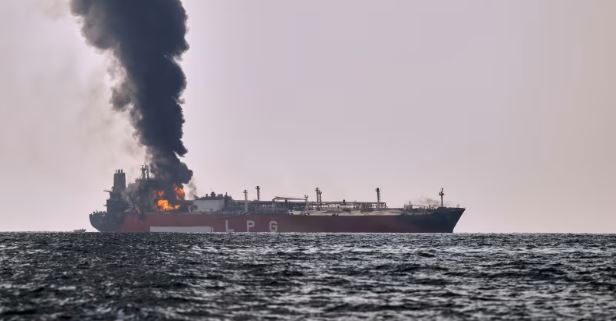
One of the most recent incidents was recorded on November 17, near Khasab in Oman, where a ship was hit by an unidentified projectile. According to the UKMTO, a fire broke out on board and engulfed the ship.
Since the start of the war, the Strait of Hormuz has become one of the most tense areas of the conflict. Attacks have disrupted the transport of oil and gas, causing repercussions for markets and the global economy. Before the war, about a fifth of the world's traded oil passed through this corridor.
Trade traffic in this sea route remains significantly lower than in 2025. Iran began efforts to disrupt shipping after the US and Israeli attacks that marked the beginning of the war. In response, the US imposed a blockade on Iranian ports.
Experts estimate that the fall in oil prices and the weakening of Iranian revenues could push Tehran to intensify attacks, in an attempt to regain influence over this corridor and force Washington to make concessions.
On Friday and Saturday alone, three tankers exiting the Strait of Hormuz were hit by shells, according to maritime risk management company Marisks.
The company has not confirmed the authorship of the attacks, but estimates that Iranian involvement is possible.
The Marshall Islands-flagged tanker Captain Leon, carrying chemicals and oil, was struck in the bow on Friday at around 15:00 UTC. The collision caused a fire on board, but all crew members were reported safe.
On Saturday, the Hong Kong-flagged tanker Torkel was hit in the stern and caught fire. Less than an hour later, another Hong Kong-flagged vessel, the Arina, was hit by a rocket in the engine room.
According to Mariks, these incidents show that commercial shipping in the region continues to face a serious threat, especially in the southern corridor near the coast of Oman, a route that is opposed by Iran.
The escalation of attacks is happening at a time when Iran is facing difficulties in exporting oil due to the US blockade of its ports.
According to energy intelligence firm Kpler, Iranian oil stocks on ships outside the blockade zone have fallen to zero since the last cargoes were unloaded in China earlier this month. Kpler warns that Iran's oil revenues could fall to zero by mid-December.
Meanwhile, global oil prices have fallen, partly due to a recovery in exports from Gulf countries. International Crisis Group analyst Hamidreza Azizi warned that markets are increasingly assuming that a return to full-scale war is unlikely and that oil supplies will gradually normalize.
However, according to him, this expectation could change quickly if Iran decides to escalate the confrontation.
On the other hand, US President Donald Trump has declared that Washington no longer needs a deal with Tehran and has warned that he will not hesitate to resume military strikes if he deems it necessary.
"We don't need a deal with Iran. Those days are long gone," Trump wrote on his Truth Social network, claiming that the US has control of financial resources and the Strait of Hormuz.
As tensions continue to rise, attacks on tankers and navigation restrictions are keeping this vital corridor at the center of the crisis, with potential consequences for global energy supplies.