


By Ahmet Prençi
I have been following the work of writer Ben Blushi with great interest for many years. Since his first book, I have been intrigued not only by the topics he chooses, but also by the way he conveys them to the reader: provocatively, courageously, with a language that does not seek to calm, but to stir thought. In his books, the event is never just an event, it becomes a question, a challenge, and a debate.
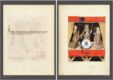
Reading the book “Crazy Stories of Tirana”, I had the feeling that I was not reading a classic history of a city. It didn’t even seem like I was reading a chronicle. I read this work as a novel. A novel with a completely unusual main character. This character is Tirana.
A character born in the 1600s and walking for more than four hundred years until our days. A character about 420 years old who grows, changes, makes mistakes, goes crazy, loves, falls and gets up again. Around him revolve hundreds of other characters like in no Albanian publication to my knowledge so far, ordinary and extraordinary people, who build their own destinies, without knowing that they are also building the fate of a city that would later be the Capital of Albania.
There are thirty-eight stories, or rather thirty-eight pauses in time. Each of them with its own adventures, absurdities, coincidences, and follies. Stories that we often have not heard, or have heard without understanding them as part of such a grand narrative.
The strength of the book does not lie only in the historical facts. It lies best in the way the story is told. With a rich, loose, eloquent language and a rhythm that does not allow you to break away, the book turns over five hundred pages into a journey that is not only enjoyed as reading, but as a deep experience. Only a proven pen like Blushi's manages to combine the document with the narrative imagination without losing either credibility or aesthetic pleasure.
As I read it, I kept getting the impression that I was watching a great historical film series. Each chapter was an episode, each episode had its own tension, adventure, and madness. A city being built stone by stone, house by house, generation by generation.
The description of the first stone laid in Tirana, of the first house, of the people who created the city, not as heroes frozen in history, but as beings with ambition, chance, conjuncture, and human folly, remained in my mind for a long time.
While reading, my feeling was this: Tirana does not emerge from this book simply as a place. It emerges as a living being. And perhaps this is the greatest achievement of this book. Different authors tell stories in their books. Blushi is the author who stirs them up. For a long time, it seems to me that he does this with great style and finesse without avoiding the chaos he causes. His style continues to remain distinctive, unique, free, provocative, often polemical, but always very capable of igniting debates.
The echoes and debate brought by his latest book "I am Muslim" have not yet died down, a work that provoked the reader to reflect not only on identity, but on the relationship between faith, history and our collective consciousness. And perhaps precisely because Blushi does not write to confirm beliefs, but to shake them, his books remain long in discussion.
For this reason, I secured the book as soon as it came out of print, so that I could be among the first readers of the book entitled “Crazy Stories of Tirana”. From the very beginning, in the first pages, I had the feeling that I was reading not just another book, but a work of vast historical, literary, memoiristic, dramatic and at the same time comical dimensions in the deepest sense of the word. Because life itself is tragic and funny at the same time. What attracted me the most is the way the author enters where history usually remains silent.
We have learned about the events. We have learned about the dates. We have learned the names of the founders, developers, and figures who accompanied the rise of Tirana. But we have usually only known them on the public stage of history, serious, monumental, with almost no private life.
While here in this work the opposite happens. Blushi opens the back doors of history. He enters the dark recesses of their lives. He does not present them to us as statues, but as people: with ambitions, jealousy, stupidity, passions, interests, weaknesses, coincidences and choices that have often changed the fate of a city. And it is precisely here that the book acquires a novel dimension. Because the author no longer tells history from above, it tells it from within. In this book, the founders of Tirana do not emerge only as builders of roads and houses, they emerge as people who built the city while struggling with themselves. And perhaps this is the reason why the book is read with the thirst of a novel and remains in the mind as a historical memory. And when you think you have understood the structure of the book, you realize that you have only entered its first gate.
Through this work passes a whole gallery of characters, events and eras that make the history of Tirana seem not as a chronological line, but as a living organism. From the figure of Sulejman Bargjini, who is associated with the first stone of the city, to the search for the origin of the name Tirana itself. From the stories of the battles and rivalries between the four Ibrahims, to the arrival of the Toptani family, with the backdrops, alliances and clashes that accompanied their influence in the city.
Then one of the brightest figures in the history of the capital appears, Haxhi Et'hem Bey, presented not only as a builder, but as a mind that understood that cities are built as much with symbolism as with stone. The foreign eye of Edward Lear also enters this journey, who sees Tirana with a surprise that we often have not seen. The enigmatic figure of Zenel Bastar and the legends of the genies appear. The links with the Ottoman Empire are restored, then the turbulent passage through the Austro-Hungarian, Italian and German occupation. In this mosaic, characters that cannot be separated from Albanian history then enter: Ahmet Zogu, Esat Pashë Toptani, Haki Stërmilli, Harry Fultz, Lumo Skëndo and Enver Hoxha.
But what makes the book even more special are not just the names, the characters that number in the hundreds. It is the stories that hide behind them. An example is the story of the Mexican millionaire who arrives in Tirana. The story of the construction of the capital's square and the Dajti Hotel. The American bombings. The birth of the Bloc. The creation of Kinostudio Shqipëria e Re. The wonderful descriptions of the neighborhoods of Tirana, of Kavajës Street and the way the city expanded and was divided between eras, classes, powers, vices and dreams. All these events, some well-known, many unknown, create a labyrinth of scenes that the reader discovers with surprise.
And what left the biggest impression on me is that the author does not treat these stories as museum relics. He brings them with realism, with irony, with cynicism where necessary, with artistic finesse and with the kind of narrative that does not sanctify history, but humanizes it. At the end of reading, a strong feeling remains: this is not just a book about Tirana. It is a book for us, for each of us. About the way we were built as a city, as a society and as people.
For this reason, it seems to me one of those books that is not read just once, but that should be in the library, because there, between those pages, is an important part of our history, the history of the place where we were born, lived, and continue to search for ourselves.
A special and emotionally strong place in the closing of the book is occupied by the time of dictatorship, not only as a political system, but as a way of life, as a daily ritual, as an atmosphere that still lingers in the collective memory of the city. Here the Tirana of the novel becomes more intimate. The silent laps of the boulevard appear, those endless walks where people seemed to move freely, while in reality they carried silence and care for every word on their shoulders. The morning gymnastics appear, not simply as physical exercise, but as a choreography of a society that sought to be the same in rhythm and thought.
The construction of the Tirana Hotel on the traces of another time passes through the pages of the book, the long lines for food pass, not only as an economic shortage, but as a ritual that shaped the patience, disappointment and psychology of generations. There are numerous and very interesting episodes and characters that cannot be summarized in such a modest piece of writing.
A particularly significant episode remains that of student dormitories, at a time when I was also a dormitory student, which the book presents not only as places of residence, but as spaces where thoughts began to be articulated that would later nourish political pluralism and the birth of the Albanian opposition.
And then comes the big twist. Tirana in the years after the fall of communism. A city that was suddenly left without a script. A city that sought freedom, but still did not know how to live it. Chaos, energy, thirst for wealth, big dreams and equally big disappointments. Against this backdrop appears the year 1997, perhaps one of the most dramatic chapters of our collective memory, with the fever of pyramid schemes, with the figures of usurers, with the collapse of beliefs and with a society that experienced both illusion and collapse.
In this panorama, the book also focuses on the role of the media of the time, on the voices that attempted to read the events as they happened, among them the newspaper “Koha Jonë”, as part of the turbulent public climate of those years. If I were to focus on some of the pages that remained in my mind the longest, I would single out the way the end of the last century was carved, where history is no longer narrated as a chronicle, but as the pulse of a city that changes its skin. There is a rare narrative force in the way the author constructs the revolt of the Tirana dormitories and the atmosphere that preceded the great changes. They are not simply students who protest. There are two worlds that are seen for the first time face to face, on the one hand the newcomers, accustomed to lack, to cramped rooms, to waiting, to survival and to the desire to break the wall, and on the other hand the non-dormitory students, closer to the rhythm of the city, with a different relationship to freedom, to fear and to the future.
Blushi does not put the characters on trial. He puts them in history. And that is precisely where literature is born. With long sentences, with unexpected turns, with comparisons that seem to flow naturally and yet bear the stamp of a style all his own, he turns the protest into a human river where idealism, anger, confusion and hope mix. These are the pages where you feel that the author is not telling you what happened, but is taking you inside the breath of time.
The panorama of 1997 seems equally impressive to me. There, Tirana emerges from itself. The city is not only physically destroyed, it seems to temporarily lose its memory. The kiosks do not appear as illegal constructions, but as a parallel world sprouting on the asphalt, like mushrooms after the rain, as a proclamation of a raw freedom that sought to conquer every possible space. And their strange, bold names, sometimes naive and sometimes grotesque, in Blushi's text take on the value of anthropological documents of a time that sought to invent itself without yet knowing what it wanted to become.
These are the pages where you realize that the author has not only written the history of Tirana. He has written its psychology. Because cities, like people, are not only told by what they built, but also by the way they went crazy. And it is here that the book closes with a special force. Because after four centuries of history, Tirana is not presented as a city that has found the answers. But as a city that continues to ask questions.
In closing, I don't know if this book will spark as much debate as Blushi's previous books. Maybe so. Because he has never chosen the quiet path of writing. He has always preferred the question before the answer, provocation before comfort, and research before reconciliation. But I felt one thing clearly while reading this book. This time he has not written just about the history of a city. He has written about time. About the way time builds us and how we, without realizing it, build our cities. He has taken a four-century-old city and given it human breath. He has entered archives, legends, memories, silence, and madness, and from them he has built a narrative that is not read as history, but as life. And that is no small feat.
I have the privilege of reading this work before it meets the reader. I say with conviction that this is not just a book that will be read, it is a book that will be talked about for a long time, will be opposed, will be remembered and will be returned to the hands after many years. Because in the end, everyone will find a piece of themselves inside it.
Someone the path where they spent their childhood. Someone a story they had never heard. Someone a memory. Someone a loss. And someone will understand for the first time that cities are not built only with stones, but with people, with stupidity, with madness, with dreams and with time. I wish that this next gem has the fate it deserves. And above all, that it finds what every writer silently seeks: not only readers, but people who, after closing the book, see their city with different eyes.
I wrote these impressions as a reader with respect and gratitude for another very interesting journey that Ben Blushi gave us. All friends who love the book, on Monday, November 2nd at 6:00 PM, this book will be promoted at the Plaza Hotel and you can pick it up there.