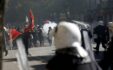



Protests and violent clashes in Tirana have attracted the attention of the Italian media. An analysis published by the newspaper Il Foglio examines the political and economic situation in Albania, focusing on the urban transformation of the capital, the links between political power and real estate investors, as well as civic dissatisfaction with corruption and the way the benefits of economic growth are distributed.
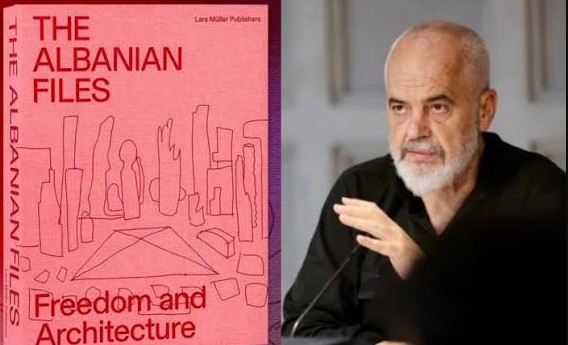
A special place in the writing is occupied by the book “The Albanian Files: Freedom and Architecture”, a publication on architecture with a foreword by Prime Minister Edi Rama, which presents Tirana as a laboratory for some of the most renowned international architects. According to Il Foglio, the book, conceived as a positive presentation of the transformation of the capital, has turned into a political boomerang for Rama.
In his introduction, the prime minister describes architecture as an instrument that not only changes spaces, but also people's mentality and their faith in the future. Rama, who led the Municipality of Tirana from 2000 to 2011 and has been prime minister since 2013, has placed urban transformation at the center of his government's image.
But, according to the analysis, Rama's political opponents have read the book as a catalog of relationships between political power, real estate investors, and international designers.
The article also brings up how some of the well-known architects have started collaborating with Albania, through Instagram messages from Rama himself, phone calls or mediation by people close to the prime minister. In this context, the Guardian newspaper's report on a WhatsApp group called "Albanian ArchArmy" is also mentioned, where international architects share projects and contacts with the Albanian political world.
Il Foglio points out that these relationships have been made public and that the book presents the projects, architects and names of the investors. According to the newspaper, this does not in itself constitute judicial proof of corruption, but exposes a system where politics, urban planning and the real estate business are closely intertwined.
The analysis further expands its view to Italy, comparing the Albanian situation with developments in European cities, especially Milan. Although Tirana is described as an extreme case, due to its rapid transformation after decades of isolation and the great concentration of economic and political power, the newspaper notes that the fundamental question is the same: who benefits from the development of cities and who is left out?
Full article:
Albania is in the headlines for the violent clashes that are shaking Tirana. The scenes resemble those of youth revolts in France or Italy, but it would be a mistake to confuse them with them. Albania is still undergoing its first major capitalist transformation since communism. The protests express anger at corruption and an economic development model whose benefits many citizens do not feel.
However, this story contains a lesson that touches us very closely. To understand it, we must start from the book The Albanian Files: Freedom and Architecture, an illustrated publication on architecture, with a foreword by Prime Minister Edi Rama, which recounts how Tirana has become a laboratory for some of the most important architects in the world: a book humbling in its praise, which has become a political boomerang.
Rama was mayor of Tirana from 2000 to 2011 and has been prime minister since 2013. He has made urban transformation a symbol of his governance. In the book’s preface, Rama explains that architecture not only serves to transform spaces, but also people’s mentality and their faith in the future. According to him, Albania attracts great architects because it offers a freedom that no longer exists in other countries. A freedom from the “no”, from the rules and restrictions that in European countries make building difficult.
The problem is that Rama's opponents have read the book in a completely different way: as a catalog of the relationships between political power, real estate investors, and international designers.
Some architects tell with surprising candor how they arrived in Albania. Some received an Instagram message directly from Rama, some a phone call, while others were introduced through people close to the prime minister.
The Guardian newspaper has reported on the existence of a WhatsApp group called "Albanian ArchArmy", where renowned international architects share projects and contacts with the Albanian political world.
The paradox is that all this happens openly, in full view of everyone. The prime minister promotes architects, renowned architects reveal their relationships with the government, while the book publishes projects and the names of investors. This does not constitute judicial proof of corruption, but rather transparently presents a system where politics, urban planning, and the real estate business are closely intertwined.
Of course, Tirana is an extreme case, having little in common with Italy. It is the capital of a country struggling to recover from decades of isolation and is the dominant center of national economic and political life, almost a city-state.
Rama exercises an extremely long-term political influence, moving from running the capital to running the government and taking with him the powers over urban planning and construction permits.
But, in essence, the economic mechanism is the same as that observed in many European cities, including Italian ones. The institutions and level of development vary, but the fundamental question remains the same: Who benefits from the growth and development of cities and who is left out of this process?
In Albania, conflict accompanies the creation of a new market economy. In Italy, it appears at a more advanced stage. Our cities are already wealthy and the real estate markets are consolidated. But the increase in property values can become a powerful mechanism of exclusion.
Milan is the clearest example. House prices are rising much faster than incomes. Even those with a regular job and a middle-class income are finding it difficult to buy a house or afford rent. For young people and those from families without inherited wealth, even entering the middle class is becoming difficult.
This is where the issue of real estate ties in with that of inequality. It's not just how much you earn from your job that matters, but also whether you own a house or inherit it.
Rising property values enrich those who already own property, while increasing costs for those who do not. A city can become more beautiful, more international, and more attractive to capital, but at the same time less affordable for the people who work and live there.
The lesson to be learned is that transparent rules and instruments are needed that enable society to benefit from a share of the economic value created by urban transformations.
Otherwise, the civic reaction is inevitable, but here lies a fundamental difference: In Albania, the protest is against a model that promises the creation of a new middle class. In our country, the risk is that the same model will end up excluding the middle class that already exists.