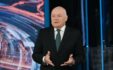




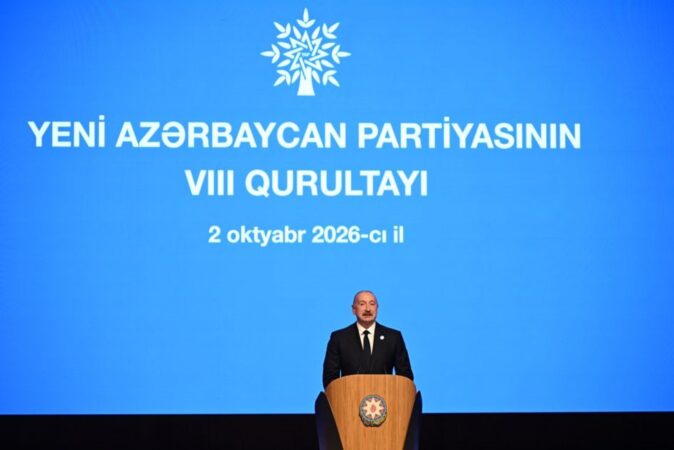



President Ilham Aliyev’s speech at the 8th Congress of the “New Azerbaijan Party” (YAP), held in Baku on October 2, outlined Azerbaijan’s priorities in a changing regional and international environment. His message focused on preserving national sovereignty, strengthening defense capabilities, promoting economic development, and ensuring a lasting peace in the South Caucasus.
The speech reflected a broader vision of national development, built on independence, a strong state, and the country’s ability to determine its own future. As President Aliyev stated, the foundations of Azerbaijan’s strategy remain “independence, statehood, economic independence, strong military potential, and the ability to make the most of our opportunities.” According to him, these principles continue to guide the country’s policies in the post-conflict period.
A central theme of the speech was that restoring territorial integrity must be followed by continued efforts to protect national security. Referring to the deteriorating international environment and ongoing conflicts in neighboring regions, Aliyev stressed that Azerbaijan must remain prepared to respond to potential threats.
“We must possess such power—and we are building this power—that no one dares even think of committing any provocation against Azerbaijan,” the President said.
He also announced that the draft state budget for 2027 has allocated nearly 9 billion manats (approximately 4.5 billion euros) for military and security needs. The planned spending reflects the government's emphasis on defense preparedness and prevention, while reconstruction in Karabakh and Eastern Zangezur, as well as improving the well-being of citizens, remain important priorities.
At the same time, Aliyev's statements addressed the relationship between military power and peace. Reflecting on the events of 2020 and 2023, he emphasized that Azerbaijan had stopped military operations at the right moments, stating that the country did not aim for “an eternal war.” His message was that national power should serve the country's fundamental interests and prevent further bloodshed.
The president also highlighted financial stability as the foundation of political independence. Azerbaijan's foreign exchange reserves have reached around 81 billion euros, roughly 20 times more than the country's external debt. He presented these figures as evidence of the importance of economic and financial stability, especially at a time when the state finances defense, reconstruction, and social programs.
Azerbaijan's energy resources and expanding international partnerships also strengthen its strategic position. However, maintaining long-term prosperity will require continued diversification of the economy and more opportunities beyond the traditional oil and gas sectors.
In foreign policy, President Ilham Aliyev emphasized Azerbaijan’s approach to maintaining balanced relations with major international powers while protecting its national interests. “However, we do not belong to any camp and will not join any—we do not need to,” he declared. Noting the wide scope of Azerbaijan’s international partnerships, he noted that the country has signed strategic partnership agreements or declarations with ten European Union member states and has recently established strategic partnership relations with both China and the United States.
Referring to the agreements signed with Beijing and Washington, Aliyev underlined the importance of maintaining constructive relations with the world's major power centers, despite the geopolitical competition between them. He also noted that Azerbaijan's expanding international engagement and its participation in new cooperation formats reflect the country's growing diplomatic profile.
Another important dimension of the speech was ideological security. Aliyev warned that contemporary threats extend beyond physical borders, especially in an era shaped by cyberattacks, artificial intelligence, and the rapid flow of information across national borders. He identified education and patriotism as important tools for protecting society from disinformation and external ideological influence. In his words, “the more educated, knowledgeable, and well-informed our people are, the less susceptible they will be to these lies, rumors, and toxic ideological provocations.”
This emphasis links national security with the preservation of Azerbaijan’s secular traditions and social cohesion. Protecting the country’s national identity, while maintaining respect for its diverse religious communities, remains an important part of its approach to internal stability. President Aliyev stated: “Our ideological space must be free from foreign elements and foreign influences. This is, at the same time, part of our foreign policy strategy. We build our foreign policy—and must continue to build it—in such a way that no one interferes in our affairs. We do not need anyone’s help or patronage. When we needed help, no one helped us. When we had a million refugees, no one extended a hand to us. Everything we have secured, we have purchased with our own money. This includes all our weapons, which we have purchased at world market prices—down to the last bullet.”
President Aliyev's speech also presented a vision in which military preparedness, economic independence, and diplomatic engagement reinforce each other. Azerbaijan's challenge is to protect its restored sovereignty while simultaneously transforming its achievements into lasting stability and prosperity.
Relations with Armenia will also be crucial for the future of the region. A lasting peace could open up new opportunities for transport, trade, and economic cooperation across the South Caucasus. Achieving this outcome will require continued diplomacy and concrete steps to implement commitments between the two countries.
The broader message is that national power and peace need not necessarily be conflicting objectives. For Azerbaijan, the long-term goal is for the ability to defend the country to become the foundation for a more secure future—a future in which sovereignty is protected, economic opportunities expand, and the South Caucasus can gradually leave its history of conflict behind.