





After the defeat of the coalition led by the former president, who had been in power for fourteen years, the country will experience a major democratic transition that could inject a calming dynamic into the Balkans.
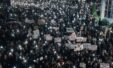
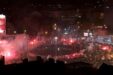
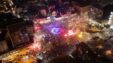
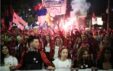
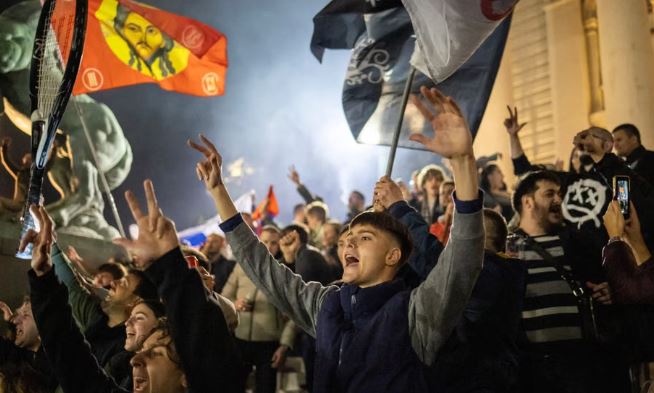
Hundreds of thousands of Serbs took to the streets on Sunday evening, October 25, to celebrate the opposition's massive victory in parliamentary elections; it marks a historic political shift in the Balkan country of 6.5 million people.
In an unexpected turn of events on voting night, Aleksandar Vučić, the former Serbian president and head of the ruling United Serbia coalition, admitted his defeat to the “student list” at a press conference held at 21:30 p.m., an hour and a half after polling stations closed.
“This is the consolidation of a revolution [that students] led directly with the support of various European countries and the American deep state, the one that opposes President Trump,” Mr. Vučić declared bitterly. An outspoken admirer of former Hungarian Prime Minister Viktor Orban, the Serbian leader has now suffered an election defeat himself, six months after his ally was overthrown by a student and pro-European wave.
Partial results from these parliamentary elections show that the student list, the main opposition movement, leads with 140 seats out of a total of 250, a clear absolute majority, while Mr. Vučić’s coalition won only 104 seats in Parliament. None of the country’s major historical parties appear to have passed the 3% threshold required for representation in this unicameral parliament, with the exception of four lists representing minorities. The Socialist Party of Serbia, founded by former President Slobodan Milošević, appears set to leave the Assembly for the first time in thirty-six years.
“This is not a victory, it is a real avalanche that will completely transform the Serbian political landscape. It is the culmination of a massive mobilization that led to the creation of a broad social and political coalition over the past two years. And it is the high voter turnout that made this change possible,” explains Nebojsa Vladisavljevic, professor of political science at the University of Belgrade. Voter turnout is estimated at over 70%, compared to just 58% in the previous parliamentary elections in 2023.
Endemic corruption
The student movement, which presented a list of 250 candidates, all from civil society and without a dominant figure, reacted on its X account with a cryptic message: “We are still in our headquarters and are closely monitoring everything that is happening on the ground. Every jackal will leave. Everything is under control. Victory is assured!”
Throughout the campaign and until Mr. Vučić conceded defeat, many observers feared that he, already facing legal proceedings, would use force or widespread fraud to cling to power at all costs. Forced by the constitution to step down from the presidency after two consecutive terms, he had called early parliamentary elections in the hope of returning to the post of prime minister, which he had previously held from 2014 to 2017.
A radical nationalist in his early days, Mr. Vučić underwent a pragmatic shift upon coming to power, adopting a more pro-European Union tone while remaining steadfast in his refusal to recognize Kosovo’s independence. His critics accused him of favoritism and of allowing corruption to run rampant within the state apparatus while he claimed closer ties with the EU.
The legislative campaign was marred by numerous irregularities, such as Mr. Vučić's overwhelming dominance of television channels, the manipulation of the voter register, violence, and illegal wiretapping of opposition figures.
"Good news for stability"
Born after a tragedy that claimed the lives of sixteen people in the city of Novi Sad in November 2024 – the collapse of a newly built train station canopy – the student movement gradually united the population's anger against endemic corruption.
The student protests, among the largest since the fall of Slobodan Milosevic in 2000, initially demanded transparent investigations, then the depoliticization of institutions and an end to systemic corruption.
These protests culminated in the final days of the campaign and on election night. In Belgrade, supporters of the “student list” peacefully took control of Pioneers Park that evening, an emblematic place of power occupied for a year and a half by plainclothes police and regime thugs, pejoratively nicknamed “chatsy.” Located between the presidential palace, the National Assembly, and Belgrade City Hall, this park – dubbed “Chatsyland” by the opposition – had been illegally closed off since March 2025 by metal barriers coated with a sticky chemical substance.
Abroad, initial reactions to the political transition in Serbia are positive. European Commission President Ursula von der Leyen congratulated the winners with unquestionable delight, emphasizing on the social network X the convergence of views with the “student list”: “We are ready to support reforms related to the rule of law, freedom of the press, the fight against corruption and the strengthening of democratic institutions.”
Bosnian political scientist Jasmin Mujanovic sees the elections as “good news for the security and stability of the Western Balkans as a whole, as Vučić was the main architect of all the major disputes in the region.” However, he expresses reservations about the student list, which he considers ideologically heterodox: “We should not expect a complete reversal of Belgrade’s positions on Kosovo, Bosnia or Montenegro.” But the historic choice of Serbian voters already offers the entire region an opportunity to ease long-standing neighborly tensions.