


The midterm elections in the United States are expected to have consequences beyond American borders, affecting Washington's relations with some of its main allies and adversaries on the international stage. The loss of the Republicans and the transfer of control of both houses of Congress to the Democrats creates a new political reality for President Donald Trump, while questions are raised in foreign capitals about the direction of American foreign policy.
For Iran, Israel, and Ukraine, the election outcome is not just about the balance in Congress. It could affect negotiations with Tehran, military support for Israel, and the pressure Washington is putting on Kiev to end its war with Russia.
Although Democrats will have more opportunities to challenge the Trump administration through Congress, the US president retains significant powers in foreign policy. The question is whether the electoral defeat will push him towards compromise or make him more persistent in achieving his international objectives.
Iran between military threat and possibility of agreement
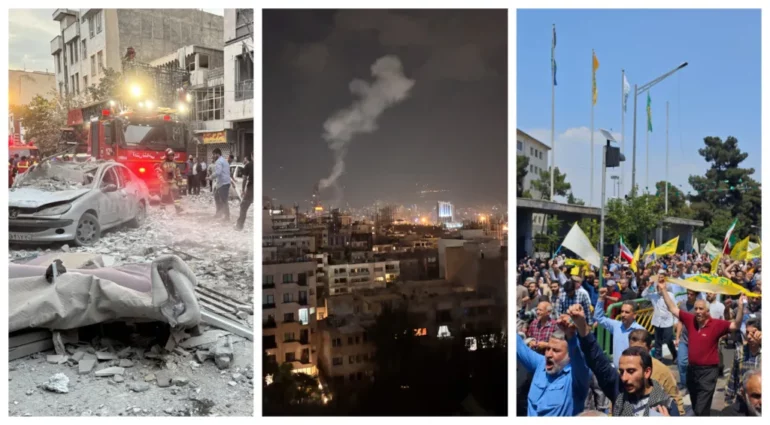
In Tehran, the election result has been hailed as a blow to Trump's policies, but Iranian authorities do not see it as a guarantee that Washington will change course. On the contrary, the country is preparing for both the possibility of a military escalation and the resumption of negotiations.
Trump himself has admitted that the war with Iran contributed to the Republicans' losses, while Vice President JD Vance expressed this position even more directly, stating that the reason for the loss was the war.
The Speaker of the Iranian Parliament, Mohammad Bagher Ghalibaf, who has been involved in negotiations with the US, warned Washington that ignoring the will of American citizens could have consequences.
However, the Iranian leadership does not expect an immediate change in US policy. The risk of new attacks remains present, as Trump has made contradictory statements regarding the possibility of another strike on Iran.
On the other hand, the negotiations have shown signs of revival. Tehran has been communicating with Qatari mediators, who are conveying proposals between the parties. An interim agreement on the Strait of Hormuz is seen as a more concrete option than a comprehensive agreement to end the conflict.
US-Israeli relations at a turning point
In Israel, the outcome of the US election has heightened concerns about the future of relations with Washington. Bipartisan support for Israel in the US has been increasingly questioned, due to the war in Gaza and objections to the level of US aid.
Democrats have expressed strong criticism of the number of Palestinian casualties, while even within the Republican Party, voices opposing unconditional support for the Israeli government have increased.
Former Israeli ambassador to the US, Michael Oren, described the situation as the end of an era in relations between the two countries. According to him, the changes could go beyond military aid and include intelligence cooperation, the development of defense systems, including the Iron Dome, and the US position at the United Nations.
Meanwhile, Prime Minister Benjamin Netanyahu is also facing difficulties in Israeli domestic politics. The loss of his parliamentary majority has added uncertainty to the future of his government, at a time when relations with the US administration are also under pressure.
Ukraine hopes for more support from Congress
For Ukraine, the Democrats' victory is seen as an opportunity to strengthen American support in the fight against Russia.
President Volodymyr Zelensky has expressed hope that the shift in balance in Congress will bring more financial and military aid to his country, as well as strengthen ties between the US and Europe.
Relations between Zelensky and Trump have been strained, particularly over the US president's pressure on Kiev to accept the terms of negotiations with Moscow. Ukraine has also faced uncertainty over US arms supplies and intelligence support.
However, a change of control in Congress does not automatically guarantee an increase in aid to Ukraine. Kiev knows that the administration's key decisions on foreign policy and security remain in the hands of the president.
Meanwhile, developments in Washington are being closely watched in Moscow. Russian President Vladimir Putin may see the coming period as an opportunity to advance his military objectives before political developments in the US shift the balance again.
In this way, the midterm elections not only change the balance of power in the US Congress, but also open a new period of uncertainty for three of the most important issues in Washington's foreign policy: the war with Iran, relations with Israel, and support for Ukraine.