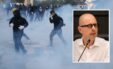






The 12th student protest in Tirana has caught the attention of the French media France 24, which has dedicated an article to the escalation of anti-government rallies, clashes with the police, and citizens' dissatisfaction with corruption and living conditions in Albania.
According to the report, the demonstrators have distanced themselves from political parties and in their banners have criticized both Prime Minister Edi Rama and the opposition leader, Sali Berisha.
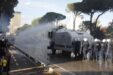
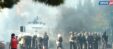
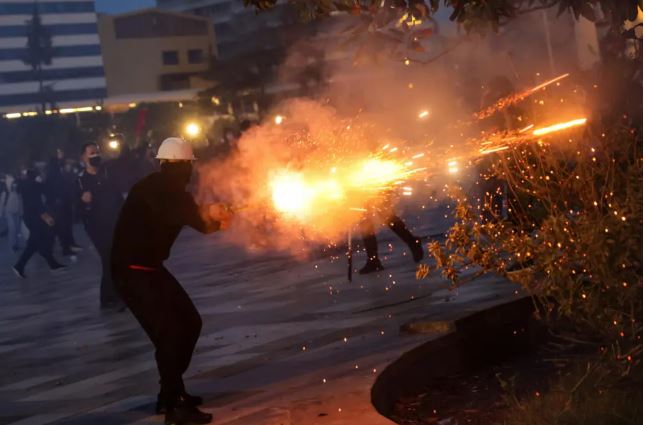
On Saturday, the protest was again accompanied by clashes between demonstrators and security forces. According to the article, police used water cannons, tear gas and rubber bullets, while some protesters threw stones and fireworks at police forces.
France 24 reports that several government buildings have been attacked, dozens of demonstrators have been detained and, according to authorities cited in the article, more than 300 protesters and police officers have been injured.
“There is a lot of anger,” activist Sidorela Vatnikaj was quoted as saying, describing the movement as a “revolution.” She stressed that the protests are not just about students or environmental issues, but also about the state of rights and the rule of law in the country.
According to AFP, thousands of citizens responded to the call to participate in the protest on Saturday. Groups representing university professors, artists and opposition parties also expressed support for the rally.
Another element highlighted in the article is the solidarity of some businesses with the protesters. Ahead of the rally, many stores closed their shutters, while some posted supportive messages, such as "Don't touch. We are with you."
Shortly after the protest began in front of the Ministry of Education, one of the main rally points, a group of demonstrators threw stones at the building. According to an AFP journalist, some of its windows had been broken in the previous days. Police intervened with water cannons, tear gas and rubber bullets.
The article also touches on young people's concerns about the future in Albania. Rosela Mira, a first-year medical student, told AFP that she wants to stay in her country and have the opportunity for a better future.
"We are here for one reason: we want to stay in our country and not have to dream of a life somewhere else," she said.
Her sister, a high school student, also raised concerns about the learning conditions, citing classes with around 40 students and the lack of necessary facilities, such as laboratories.
Economic hardship is another important theme of the protests. Fabiola Nikaj, a third-year student at the Faculty of Law, said that young people are forced to work in several jobs to help their families, due to their parents' low pensions.
The banners held by teachers and lecturers displayed messages such as "No violence", "Transparency" and "Democracy in danger".
France 24 also brings attention to emigration, reporting that more than 1.5 million people have left Albania since the fall of communism in the 1990s, while the country's population is estimated at around 2.3 million.
The article also mentions Albania's ranking of 91st out of 182 countries in Transparency International's Corruption Perceptions Index.
French media reporting presents the student protest as part of a broader social discontent, where demands for transparency, justice, better living conditions, and opportunities for the future are intertwined with opposition to the political class.