




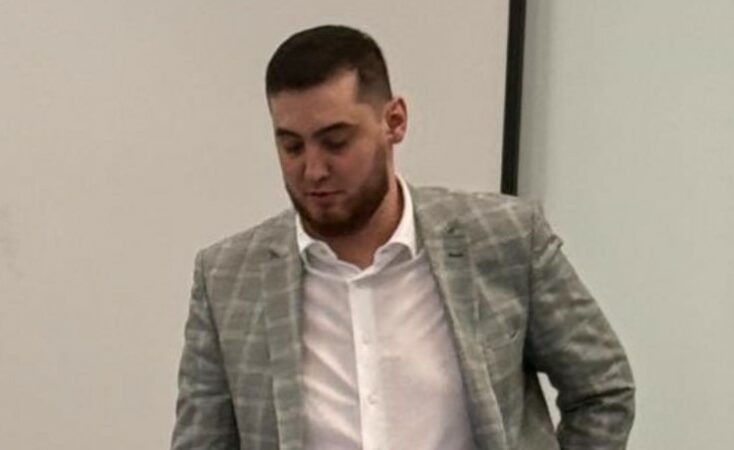



By Sorin Guzgan
Chișinău, Republic of Moldova — A serious controversy has emerged in Moldova’s legal community after a lawyer reported being arbitrarily removed from a criminal procedural action and potentially subjected to covert investigative measures, raising concerns about interference with the independence of the legal profession and the right to defence.
Attorney-at-law Sorin Guzgan has filed a formal complaint with the Superior Council of Prosecutors and a separate request with the Prosecutor General’s Office, alleging serious procedural abuses committed during a criminal investigation handled by the Prosecutor’s Office for Combating Organized Crime and Special Cases (PCCOCS).
According to the complaint, on 8 April 2025, Mr. Guzgan, who at the time was acting as a trainee lawyer under the supervision of a coordinating attorney, participated in a procedural action together with the main defence counsel and the client. During the proceedings, the prosecutor allegedly ordered his verbal removal from the office, without any written decision, without legal grounds, and against the will of the defence. The procedural action continued in his absence.
The lawyer argues that this exclusion directly affected the client’s right to defence and constituted an unjustified interference with the exercise of the legal profession.
Even more concerning, Mr. Guzgan states that he later obtained information suggesting that special investigative measures may have been applied against him during the same period, despite the fact that he had no procedural status other than that of defence counsel and was neither a suspect nor an accused person. He has formally asked the Prosecutor General’s Office to clarify whether such measures were carried out and whether his personal data was accessed.
The case has attracted international attention after Albanian lawyer and human rights advocate Ulian Bajrami publicly referred to the situation on LinkedIn, describing it as an “urgent call for professional solidarity” and warning that intimidation of lawyers and interference with the defence function represent a serious threat to fair trial guarantees.
Observers note that Albania and the Republic of Moldova share important structural similarities, particularly the fact that both countries are undergoing comprehensive vetting processes of judges and prosecutors aimed at reforming their justice systems. In this context, cases involving alleged pressure on lawyers are seen as especially sensitive, as they test whether judicial reforms translate into real and effective guarantees for the rule of law in practice.
Legal experts emphasize that under both Moldovan law and the European Convention on Human Rights, the right to defence and the independence of lawyers are fundamental safeguards of a fair justice system. Any arbitrary exclusion of a member of the defence team or covert surveillance of a lawyer in connection with their professional activity would raise serious legal and constitutional issues.
At this stage, the authorities have not publicly commented on the substance of the allegations. The complaint is currently pending before the Superior Council of Prosecutors, and the request submitted to the Prosecutor General’s Office is under examination.
Mr. Guzgan says his objective is not to prejudge the outcome of any investigation, but to ensure transparency and accountability: “When such practices remain hidden, they risk becoming normalized. Silence is not an option.”
The case is being closely watched by members of the legal profession in Moldova and abroad, as it may become a significant test of whether ongoing justice reforms and vetting processes are capable of delivering real institutional protection for the independence of lawyers and the effective right to defence, not only formal change.